cnfanssheet.com
How to Judge Mammut Jacket Specs, QC, and Use Cases
Before buying a [Mammut](https://fashion-reps.net/brand/mammut) fall/winter jacket, the three easiest things to confuse are: what the product page says, what the photos actually show, and what the QC pictures can prove. This article only discusses evidence-based judgment before purchase, not treating page descriptions as real-life experience, nor replacing real-time verification of specific product links, size charts, inventory, and shipping. 🧭 If your current goal is to judge whether a jacket
Editor score 4.2 / 5
Before buying a Mammut fall/winter jacket, the three easiest things to confuse are: what the product page says, what the photos actually show, and what the QC pictures can prove. This article only discusses evidence-based judgment before purchase, not treating page descriptions as real-life experience, nor replacing real-time verification of specific product links, size charts, inventory, and shipping. 🧭
If your current goal is to judge whether a jacket is suitable for commuting, city walking, or weekend activities, it's recommended to first complete three actions: record the original product page information, check the QC pictures in the details page, and then assess risks according to your own use scenarios. Data not provided on the page should be clearly marked as "unable to confirm" rather than filled in with brand impressions.
Clarify the judgment tasks to solve before buying a Mammut fall/winter jacket
What needs to be answered before purchasing is not "Is this jacket good-looking?" but the following actionable questions:
- Does the product page clearly state the style, size, color, and variants?
- Does the page provide complete size data, not just letter sizes like S, M, L?
- Can the photos confirm structures such as hood, placket, pockets, cuffs, and hem?
- Do the QC pictures show the actual item to be shipped, not just promotional images?
- Does this visible information match the needs of commuting, city walking, or weekend use?
The current materials do not include verifiable specific product URLs, page screenshots, product names, size charts, prices, inventory, seller information, or QC pictures. Therefore, we cannot confirm the actual fabric, warmth level, waterproof performance, fit, stock status, or workmanship of any particular Mammut jacket. The following provides a verification framework for fashion-reps product pages; before actually ordering, you should base your decisions on the target product page and corresponding QC records.
Record the title, images, sizes, and variants on the target site's product page
When viewing a product on fashion-reps, first save the original information that can affect your purchase decision. Do not just record the brand name and main image, because the same brand may have different series, years, thicknesses, and intended uses.
Check in the following order:
- Record the product page title, page URL, seller name or store identifier, and the verification date displayed on the page.
- Record color, size, whether there are different versions, and currently available variants.
- Save the main product image and detail images, distinguishing between promotional images, seller's actual photos, and QC pictures.
- Check whether the size chart includes specific measurements such as length, chest, shoulder width, sleeve length, and record the units.
- Record the page's original description of material, filling, structure, protective features, and suitable season.
- Record price, shipping, warehousing, inspection, consolidation, and after-sales conditions; these should be re-verified before ordering.
If the page only has a brand name, a few promotional images, and letter sizes, but no size data or variant descriptions, it should not be regarded as a product page with complete information. Clear photos do not equal sufficient information, and a low price cannot prove material, authenticity, or durability.
Organize fit, structure, and visible details according to page specifications
Page specifications and image judgment should be recorded separately. What the page states is seller or platform display information, and what can be directly observed in images is visual evidence; neither automatically proves wearing comfort or long-term performance.
You can create a brief verification record:
| Item | What to record | Conclusions that cannot be directly inferred |
|---|---|---|
| Fit | Page measurements, length, chest, shoulder width, sleeve length, whether loose or slim | Cannot confirm the fit on body from flat lay photos alone |
| Structure | Hood, placket, pockets, cuffs, hem, seam positions | Cannot confirm structural strength from appearance alone |
| Material | Fabric, lining, filling, and proportions listed on the page | Cannot confirm hand feel, breathability, or warmth from photos |
| Protection description | Whether the page explicitly states windproof, water-repellent, or other functions | Cannot treat promotional words as test results |
| Color and details | Main color, logos, zippers, stitching, and decorative details | Cannot confirm actual color difference from screen colors |
When checking fit, compare your own body measurements with the page's dimensions, rather than directly applying the letter size you usually wear. Especially for fall/winter jackets, you need extra room for layering sweaters or fleece; but too much room can affect warmth and wind resistance. If the size chart lacks measurement methods, units, or corresponding variants, confirm with the seller before purchasing; do not guess.
When checking structure, focus on whether the placket is flat, the zipper is continuous, pocket positions are symmetrical, cuffs and hem are obviously deformed, and the hood is clearly connected to the body. Photos can only help identify visible problems; they cannot confirm zipper smoothness, filling evenness, stitching strength, or range of motion.
Enter QC pictures through the product details page and distinguish visible evidence
The value of QC pictures is to help buyers check the appearance of the actual item, but they are not a complete quality inspection, nor are they equivalent to trying on or laboratory testing. After entering the QC pictures, first confirm whether the pictures correspond to the current order or current product variant, then check shooting angles and coverage.
Check in the following order:
- First confirm the overall picture, checking color, style, length, and main structure against the product page.
- Then view detail images of logos, placket, zipper, cuffs, hem, and pockets.
- Check left-right symmetry, obvious stains, damage, loose threads, creases, and abnormal wrinkles.
- See if there are size tags, care labels, or other key details promised on the page.
- Note the number of pictures, clarity, lighting, and obstructions; parts lacking angles should be marked as unconfirmed.
If the QC pictures do not show the full garment, key details, or size tags, you cannot assume there are no problems just because none were visible. If the pictures clearly differ from the product page in color, logos, structure, or size information, pause shipping or the ordering process and request further confirmation. The platform's inspection, photography, and after-sales options should also be based on actually available processes and fees; do not assume free replacement or return is guaranteed.
In the fashion-reps purchasing process, buyers also need to distinguish between product page review and platform service processes. The platform providing page information, order status, or QC picture access does not mean the platform offers unconditional guarantees for product quality, brand authenticity, functional performance, or seller promises. Check the rules and order options displayed at the time for specific service scope. 🔍
Build an adaptation checklist for commuting, city walking, and weekend scenarios
Different scenarios have different focuses. Do not assume a jacket is suitable for all activities just because it looks suitable for cold weather.
For commuting, prioritize checking weight, range of motion, pocket layout, placket, and ease of cleaning. If you need to carry a phone, keys, or transit card, confirm that pocket positions and closures meet your needs. If you take public transportation daily, a jacket that is too heavy or too long may reduce convenience; these judgments require combining size and structure images, not just the product title.
For city walking, focus on windproof structure, hood adjustment, cuff and hem design, and allowance for arm lifting and movement while walking. When the page only says "windproof" or "warm", look for fabric descriptions, structural images, and QC details; do not interpret a single function word as a guarantee within a specific temperature range.
For weekend scenarios, which may involve longer outdoor activities, backpack friction, weather changes, and layering, confirm before purchase whether the jacket has enough room for inner layers, whether backpack straps will cover or wear key areas, and whether the page provides details to support these judgments. If the product information cannot explain weight, filling, fabric composition, or care requirements, lower your expectations for its outdoor performance.
Use the following quick judgment:
- Mainly short indoor/outdoor commuting: prioritize size, weight feel, pockets, and placket.
- Mainly city walking: prioritize range of motion, hood, cuffs, hem, and protection descriptions.
- Mainly weekend outdoor: need more evidence on fabric, filling, care, and long-term durability.
- For severe cold, continuous snowfall, or high-intensity outdoor use: if the page lacks reliable specifications and functional evidence, do not make a purchase decision based solely on images.
Distinguish page facts, image judgments, and unconfirmable material experiences
To avoid misjudgment, divide information into three layers.
The first layer is page facts, such as size values, color options, product descriptions, price, shipping, and optional services displayed on the page. These facts are time-sensitive; record the verification date and re-check before checkout.
The second layer is image judgments, such as whether you can see pocket closures, logo positions, obvious stains, or stitching appearance. These judgments only cover what the images show and are affected by lighting, angle, compression, and obstructions.
The third layer is unconfirmable experiences, including fabric hand feel, actual warmth, breathability, wearing comfort, zipper smoothness, post-wash changes, and long-term durability. Without actual measurements, reliable testing, or clear explanations, do not write these as verified conclusions. 🧵
"Looks thick" does not equal a clear warmth rating; "surface is shiny" does not equal waterproof; "neat stitching" does not equal long-term durability; "clear brand logo" does not equal confirmed authenticity. For these issues, the safest approach is to keep questions, request specific explanations from the seller or platform, and decide whether to proceed based on risk.
Summarize possible advantages, limitations, and evidence needed
Given that the current materials do not include specific product pages and QC pictures, we can only outline judgment boundaries and cannot confirm the actual pros and cons of any particular Mammut fall/winter jacket.
Possible advantages: If the product page provides complete measurements, clear variants, structural details, and corresponding QC pictures, buyers can reduce risks of size, color, and appearance mismatches before ordering. If the page also provides clear material, care, and service information, the suitability judgment for commuting or city walking will be more specific.
Main limitations: Relying solely on product title, brand name, or promotional images cannot confirm fabric experience, filling quality, functional performance, brand authenticity, and long-term durability. Even clear QC pictures typically only cover visible appearance and cannot replace complete inspection or actual wearing.
Before continuing judgment, at least the following evidence is needed:
- The actual page URL of the target product and its current product title.
- Page screenshots or text records of the corresponding color, size, and variant.
- Complete size chart and measurement units.
- Specific descriptions on the product page of fabric, filling, protective features, and care methods.
- QC overview and detail images corresponding to the current product.
- Price, shipping, warehousing, inspection, consolidation, and after-sales conditions shown on the checkout page.
When importing, also check declaration, taxes, import restrictions, and customs documentation requirements based on the destination country or region. Do not reduce costs through under-declaration, splitting orders to avoid taxes, or evading inspection. Whether the product can be purchased, shipped to the destination, and the final cost should all be based on the information displayed by the platform and shipping route at the time. 📦
Complete the pre-order Mammut jacket verification checklist and next steps
Before ordering, confirm each item on the following checklist:
- [] Product page title, seller, and variants recorded.
- [] Color and size match actual needs.
- [] Size chart contains sufficient data and has been compared with your own measurements and layering needs.
- [] Page specifications do not obviously contradict product images.
- [] Corresponding QC pictures have been accessed from the product details page.
- [] QC pictures show overall appearance and main details.
- [] Visible stains, damage, loose threads, deformation, or logo issues have been addressed.
- [] Material and functional experiences that cannot be confirmed from photos are separately marked.
- [] Price, inventory, shipping, service fees, and after-sales conditions re-confirmed on the verification date.
- [] Declaration, taxes, import restrictions, and customs requirements checked for destination.
- [] Specific questions raised with seller or platform for parts with insufficient page evidence.
The next step is not to order directly based on the brand name, but to open the target product page, complete the page record, and then check the corresponding QC pictures. If the page cannot provide sizes, variants, or key details, or if the QC pictures are insufficient to judge obvious risks, hold the order and request additional evidence. Only when page specifications, visible appearance, and usage scenarios are basically consistent is it appropriate to continue comparing prices and shipping options.
Keep reading on this site
Gucci Black Tee Candidate List: fashion-reps vs Sheets 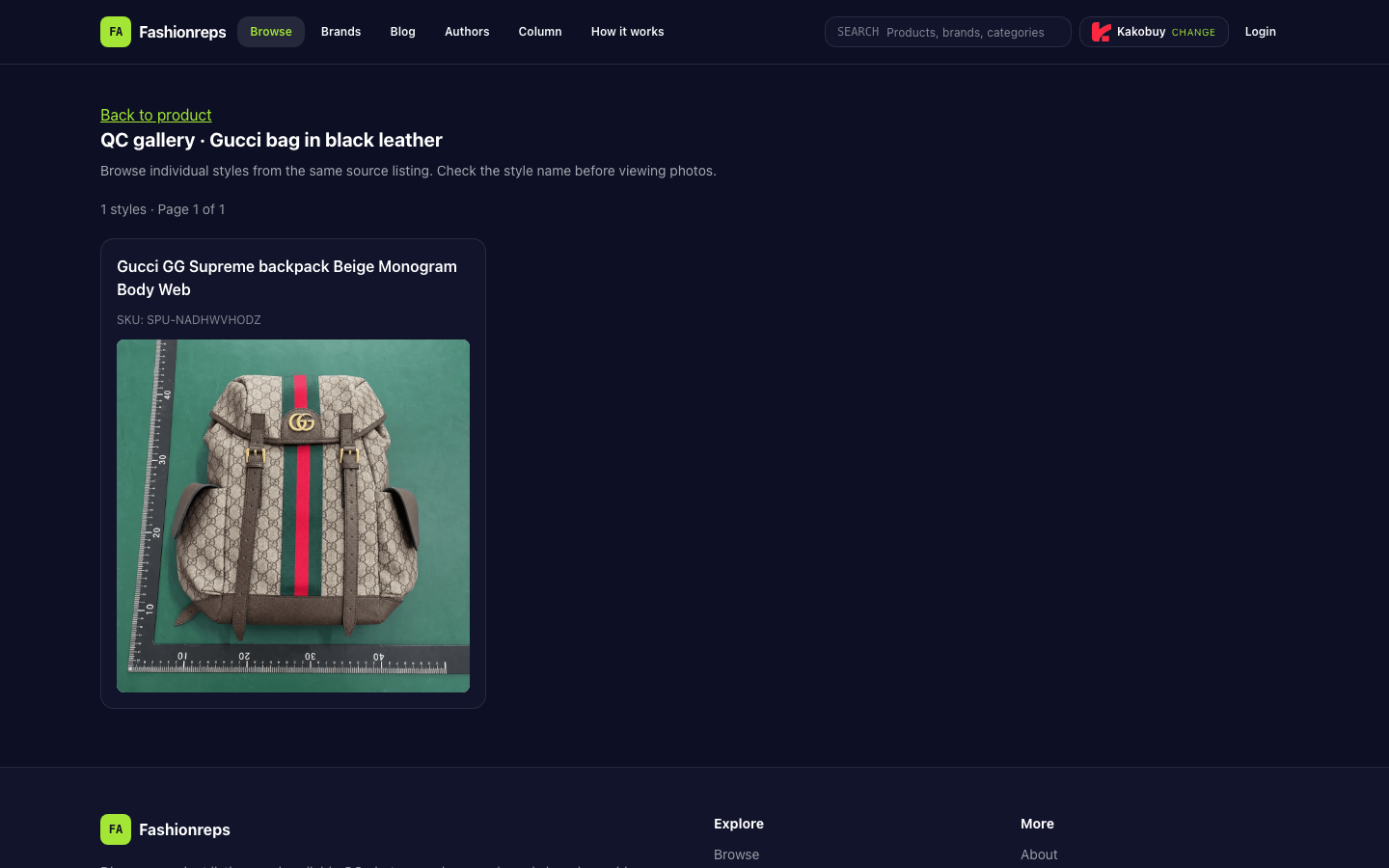
## Bottom Line Currently verifiable evidence from fashion-reps pages is insufficient to prove that a purchasable [Gucci](https://fashion-reps.net/brand/gucci) black tee candidate exists in the catalog, or to confirm its color, size, price, stock, shipping, or valid purchase link. Therefore, unverified items cannot be compiled into a recommendation list. In this case, fashion-reps is better suited for initial page discovery and link verification; Google Sheets is suitable for recording fields, fi
Palm Angels Hoodie Shipping Cost Check 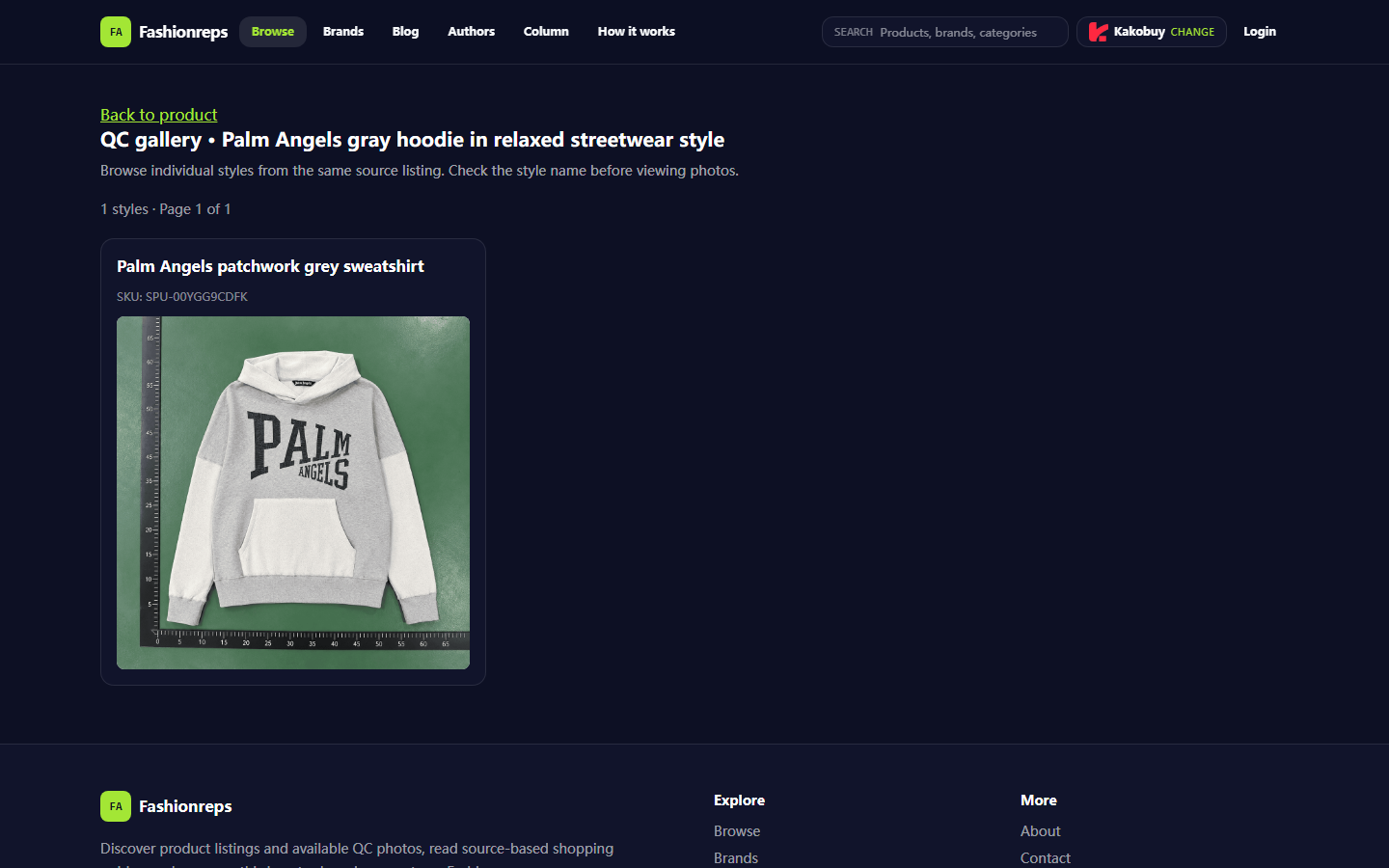
This verification guide is for buyers preparing to discover a [Palm Angels](https://fashion-reps.net/brand/palm-angels) fall/winter [hoodie](https://fashion-reps.net/hoodies) from [Fashionreps](https://fashion-reps.net/) and plan to ship it overseas through an external shopping agent. The core task is not to guess shipping costs first, but to record the item amount, service fees, payment fees, packaging, chargeable weight, shipping line costs, exchange rates, and possible taxes before payment an
Fendi Scarf Coupon Check Before Checkout 
## What This Fendi Scarf Coupon Verification Task Solves If you're about to look up Fendi fall/winter [scarves](https://fashion-reps.net/accessories/scarves) on fashion-reps and want to confirm whether a coupon actually works before submitting your order, the most important step is not to search for a string that looks like a discount code first. Instead, check four things: eligible items, usage thresholds, exclusions, and the final amount on the checkout page. This article is for buyers who hav
- This information is being prepared.