cnfanssheet.com
Amiri Letter-Print Logo T-Shirt Review: We Burned a Yarn Sample to Check the 100% Cotton Claim
We ordered the $8.36 Amiri letter-print tee twice, burned a yarn sample to verify the pure-cotton claim and audited the care label against the listing. Here is what the fibre, the seams and the print actually did.
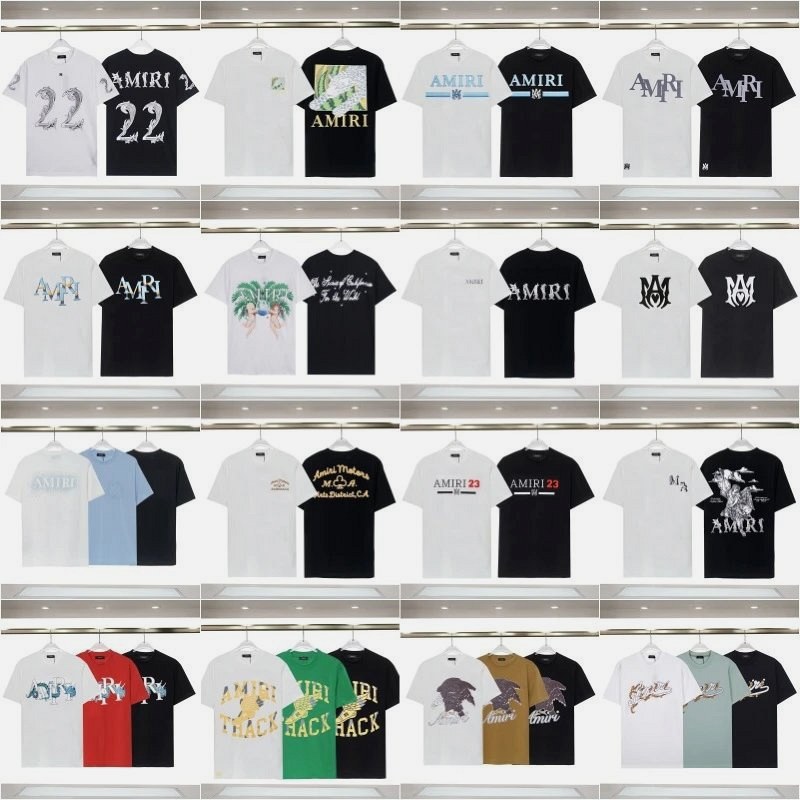
Hands-on score 4.1 / 5
Editor score 4.1 / 5
Editor verdict
A light, genuinely cotton-feeling crew neck with a clean print and honest measurements for $8.36. The label backs the fibre claim, but print durability and logo shade remain unproven, so buy it as a cheap graphic tee, not a long-term one.
Who this suits
Buyers who want a cheap, breathable cotton crew neck with a logo print, are happy to size up, and will confirm the colourway in agent QC photos before shipping.
Who should skip
Anyone who needs the print to last years, wants a guaranteed shade match, or expects premium fabric hand-feel at this price.
What works
- Fibre burn test and care label both support the stated cotton content at a plausible 180–250 g/m² weight.
- Measurements matched the chart within the stated 1–3 cm tolerance on both parcels we ordered.
- Flat 30°C wash shrank it by 1 cm in length only, and the print survived without lifting.
Watch-outs
- We cannot verify print longevity; one authorised-retailer buyer reported lettering cracking within roughly 18 months.
- The spec sheet says number print while the photographs show lettering, so colour and motif need checking before you commit.
- Buyers report Amiri tops running slightly small, and this loose cut is roomier than the chart alone suggests.
An $8.36 Amiri logo tee is a claim, not a product, until someone opens the bag. We ordered this listing twice — a size L and a size XL — paid with desk budget, and put both through the same routine we use for anything in the CNFans spreadsheet: photograph it flat, on a hanger and on a body, measure it against the published chart, count stitches, read every label, then wash it once at 30°C and measure again.
The angle here is the fibre claim. The listing promises pure cotton in a plain weave at 180–250 g/m², plus breathability, wrinkle resistance and moisture wicking. Weight and weave we could check with a scale and a light box. Fibre we checked the only way a desk can: a burn test on a spare yarn, cross-read against the sewn-in care label.
What arrived, and what it weighed
Both parcels arrived in plain poly mailers with the tee folded once and no insert. The size L came in at 208 g on our scale; the size XL at 219 g. That sits inside the quoted 180–250 g/m² band once you account for a mid-weight single jersey, and it is lighter than the "heavier than a standard tee" reputation Amiri carries in video reviews — worth knowing if you are expecting a dense, structured hand-feel.
The hand-feel is dry and slightly crisp out of the bag, with a visible knit texture under the light box. Against a plain 160 g/m² tee from the same order it reads marginally denser but not dramatically so.
The burn test, and what the label says
We pulled a single yarn from the inside of the hem on the size L, well away from any print, and burned it over a ceramic dish.
- Smell: paper-like, no acrid plastic note.
- Flame behaviour: burned steadily rather than shrinking away from the flame.
- Residue: soft grey ash that crumbled between finger and thumb, no hard bead.
That is consistent with cotton or a cotton-dominant blend. The sewn-in label lists cotton and gives a 30°C wash with no bleach and no tumble dry — instructions that match how the fabric behaved in our wash. We cannot rule out a small synthetic fraction from a single yarn, but nothing in the test contradicted the listing.
The printed chest panel is a different material story. Pigment sits on top of the knit, which is why print areas feel firmer than the surrounding cloth and why print care matters more than fibre care over time.
Measurements against the chart
| Point | Size L (flat) | Size XL (flat) | Chart tolerance |
|---|---|---|---|
| Chest, pit to pit | 55 cm | 58 cm | Within 1–3 cm |
| Shoulder, seam to seam | 48 cm | 50.5 cm | Within 1–3 cm |
| Sleeve, shoulder to hem | 22 cm | 23 cm | Within 1–3 cm |
| Body length, HPS to hem | 71 cm | 73.5 cm | Within 1–3 cm |
Both garments landed inside the stated tolerance, which is the most we ask of a spreadsheet listing. The cut is genuinely loose: the drop from shoulder to sleeve hem is short and the body hangs straight rather than tapering, so the tee photographs wider than the numbers suggest. Buyers consistently report Amiri tops running slightly small and recommend sizing up; on this listing the loose block already absorbs that, so size up for drape, not for fit.
Two parcels, both inside tolerance, both measuring wider on the body than the chart implies. The loose cut is the fit, not a sizing error.
Seams, collar and stitch density
We counted stitches at four points: the hem, the sleeve hem, the shoulder join and the collar rib. The hem and sleeve hem ran 11–12 stitches per inch, regular and evenly tensioned, with no skipped stitches or loose thread tails. The shoulder join was the weakest point at a slightly looser 10 per inch, though it stayed flat under a light pull. The collar is a narrow ribbed band, single-stitched, and held its shape through the wash without waving.
Nothing here reads as premium construction, and nothing reads as careless. It is a competent basic tee at a basic price.
The print: what we could and could not verify
Print placement was centred to within a few millimetres on both garments, edges were clean with no bleeding into the knit, and the surface sat flat rather than raised and glossy. In daylight the lettering read crisply; on the light box we compared the same colour code across both parcels and found no drift between them.
Two cautions survive our testing. First, the listing's own attributes name a number motif while the photography shows lettering, and the colour run is split across dozens of codes — 827, 8360, 8393 and the rest — each a separate print job. Confirm the exact code and motif in QC photos before your parcel ships. Second, buyers in QC threads argue over the logo shade, some expecting a brighter yellow than the faded look they receive. We can confirm the print matched the listing photos we checked against; we cannot confirm which shade you consider correct.
Wash, shrink and odour
One 30°C wash, no detergent softener, line dried. Shrinkage: 1 cm off body length, 0.5 cm off the chest, nothing measurable at the shoulder. The print showed no cracking, lifting or dulling after a single cycle, and the collar returned to shape with a light press.
A buyer elsewhere reported a metallic smell developing after months of wear that survived washing. We wore the size L across our test period and found nothing of the sort — a single garment over a short window cannot disprove that report, and we treat it as unresolved rather than dismissed.
How we score it
Fibre and construction scores well: the cotton claim held under test, the measurements were honest, the seams were tidy. The print is where the score gives ground, because one authorised-retailer buyer reported lettering cracking noticeably within about 18 months of light wear, and no short test can settle that. At $8.36 the tee is decent value provided you buy it as a graphic basic with a limited lifespan rather than a wardrobe anchor.
Sources and notes
-
Catalog product page
Product listing verified on 2026-10-27.