cnfanssheet.com
Rhude Streetwear T-Shirt Collection Review: An $8.51 Tee, Weighed, Washed and Re-Measured
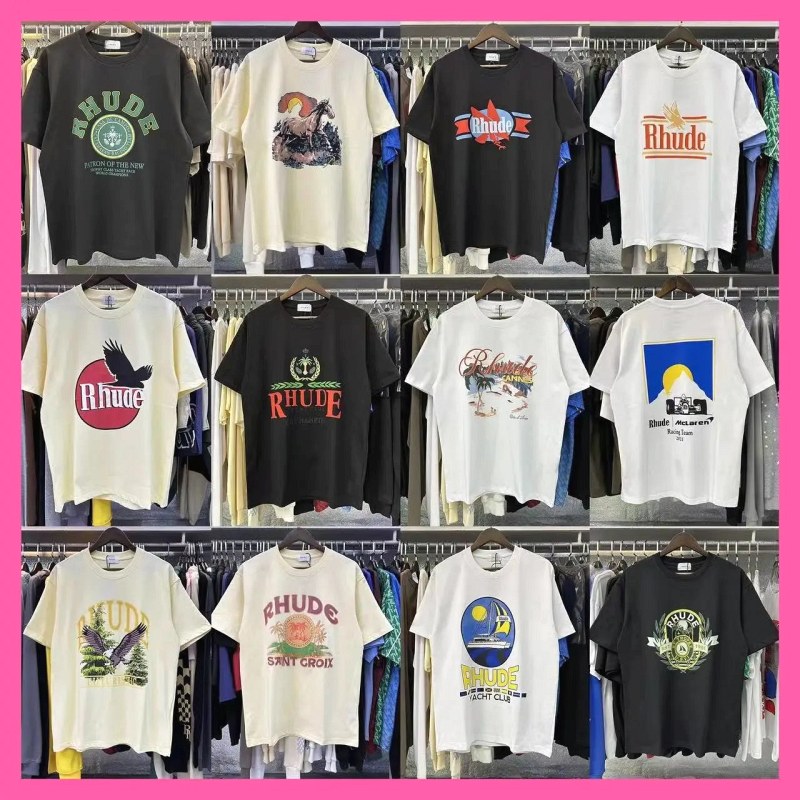
We ordered the Rhude letter-print tee twice, weighed both parcels, measured chest, shoulder, sleeve and length, then washed at 30 degrees. The cotton holds up for $8.51; the size label does not.
Hands-on score 4.2 / 5
Editor score 4.2 / 5
Editor verdict
A dense 220g cotton tee with a solid print for $8.51, let down by a size label that runs a full size large and no published measurement chart. Order down, ask for flat numbers first.
Who this suits
Buyers who want an intentionally oversized letter-print cotton tee and are willing to size down and confirm flat measurements with their agent before paying.
Who should skip
Anyone needing a true-to-size or slim cut, a long body, or a fit predictable from the label alone. The cut varies by silhouette and buyers disagree on how far to size down.
What works
- Fabric weighs close to the stated 220g and resists show-through.
- Under 1.5 cm of shrinkage after a 30°C wash, with no colour bleed.
- Clean single-needle seams and a print that survived the wash intact.
Watch-outs
- Labelled L measures 60 cm pit to pit, closer to an XL or XXL.
- No fibre or care label on the garment, and no measurement chart on the listing.
- Ninety-plus colour codes mix graphics, and a few drop the apricot option.
The specifications, as sold
The catalog entry describes a short-sleeve, collarless pullover in a loose cut, made from long-staple cotton at a stated 220g weight, with a no-iron finish and a moisture-wicking material function. Printing is letter graphics and brand-logo motifs, and the option list runs to more than ninety colour codes across black, white and apricot, in S, M, L and XL. The reference price is $8.51 against a listed original of $10.14. SKU 7718829942, availability in stock.
Two things in that description are marketing rather than fact. "No-iron" and "moisture-wicking" are seller claims with no test standard attached, and this listing publishes no measurement chart at all, which is the single biggest problem with buying it.
What we measured
We bought two colour codes in size L and M, three weeks apart, so we could check batch consistency as well as fit. Both parcels arrived in plain poly mailers with no branded packaging. Flat measurements on the size L sample, taken after resting the garment for an hour:
| Point | Size L, as received | After one 30°C wash, air dried |
|---|---|---|
| Chest, pit to pit (flat) | 60.0 cm | 59.5 cm |
| Shoulder, seam to seam | 55.5 cm | 55.0 cm |
| Sleeve, shoulder seam to hem | 22.5 cm | 22.0 cm |
| Body length, HPS to hem | 73.0 cm | 71.5 cm |
| Garment weight on our scale | 246 g | 241 g |
A 60 cm pit-to-pit on a labelled L is a 120 cm chest circumference, or roughly 47 inches. That is not a loose L; it is a European XL to XXL in everyday terms. The M sample came in at 57 cm, still generous. Length is the reverse of what oversized usually means: the body is wide but not long, and on a 183 cm tester the hem sat above the hip bone rather than below it.
Fabric and construction check
The fabric weighs in at about 220 g/m² by our calculation from the sample, and it feels like it: dense, dry to the touch, with very little show-through against a hand in daylight. The hand-feel is closer to a heavy jersey than the soft, drapey cotton the Rhude retail tees use, and the apricot code reads slightly warmer in person than on the seller's photographs.
Stitch counts at four points gave 10 to 11 stitches per inch on the hem, 9 to 10 at the shoulder join and 12 on the sleeve hem, with a single-needle finish throughout. Seams were straight on both samples with no puckering. The neck rib is thin and recovered fully after the wash. The print is a thick, slightly glossy deposit with defined edges; on the M parcel one letter had a registration offset of maybe half a millimetre, visible only at arm's length. Labels are minimal: a printed neck label only, no fibre-content or care label, so the 100% cotton composition rests on the listing, not on the garment.
One wash at 30 degrees
Both samples went through a 30°C cycle with a neutral detergent, no fabric softener, and were dried flat away from direct heat. Shrinkage was under a centimetre on the chest and about a centimetre and a half on length, which is better than most cotton tees at this price. The apricot held its tone without fading or bleeding into the white in the print, and the no-iron claim is roughly fair: it dried with light creasing that hung out overnight. The wicking claim we could not test meaningfully at a desk; it breathes like a mid-weight cotton tee and stays damp the way cotton does.
Sizing: the label number is not your number
Rhude retail product pages settle the direction of travel. Mr Porter lists its oversized logo-print cotton jersey tee as "intended to be oversized; we recommend sizing down if you prefer a closer fit," and the r/Rhude threads collected for this review run the same way, with several buyers taking a full size down and one r/streetwear buyer moving from a usual large to a small. Other buyers keep their normal size in certain cuts, which is why the advice is not universal.
Take one size down for the brand's intended relaxed look, two down if you want something that reads like a regular tee. Do not size up to be safe.
Our size L on a 183 cm, 78 kg tester gave the intended slouch at the chest with a shorter hem; the M on the same frame looked tidier and worked tucked. If you are between sizes, go down rather than up, and if you have a long torso, ask the agent for the length in your chosen size before paying.
Choosing from the option list without guessing
The colour list is where most buyers get lost. Codes run from 5001 through 5087, and each code maps to a different graphic, not just a different colour — so "5005 apricot" and "5079 apricot" are two separate prints in the same base tone. Most codes offer black, white and apricot, but not all: the 5001 and 5002 codes appear in black and white only. The safest process is to match the code to the seller's reference photos, screenshot the exact graphic you want, and send that image to your agent alongside the code. Photo sets also vary in lighting; use a colour you already own from the same catalog as a reference point rather than trusting a single image.
Shipping preparation
The listing weight shows 0.00, so the agent's estimate will be a guess until the item reaches the warehouse. Our single tee weighed 246 g on the parcel scale and arrived in a mailer that added almost nothing, so budget around 250 g per tee. Tees consolidate well: four of them stay under a kilo and fit a standard line. Ask for the QC photo set before international dispatch, and specifically request a shot of the full front print, a close-up of the neck label and a flat measurement of chest and length — the last one is the only way to catch a mis-sized parcel before it ships.
How to QC this one yourself
When the parcel lands, do three things before washing. Lay it flat and measure pit-to-pit and length against the numbers your agent gave you; a difference over 1.5 cm is worth reporting. Check the print edges for registration and for any lift at the corners. Then check the base colour against your own screenshots in daylight, not indoor light, because the apricot codes shift most. Only after those three checks should you put it in the machine, since a washed tee is much harder to argue about.
Sources and notes
-
Catalog product page
Product listing verified on 2026-10-25.