cnfanssheet.com
Community Apparel & Sneakers: Color and Styling Combos
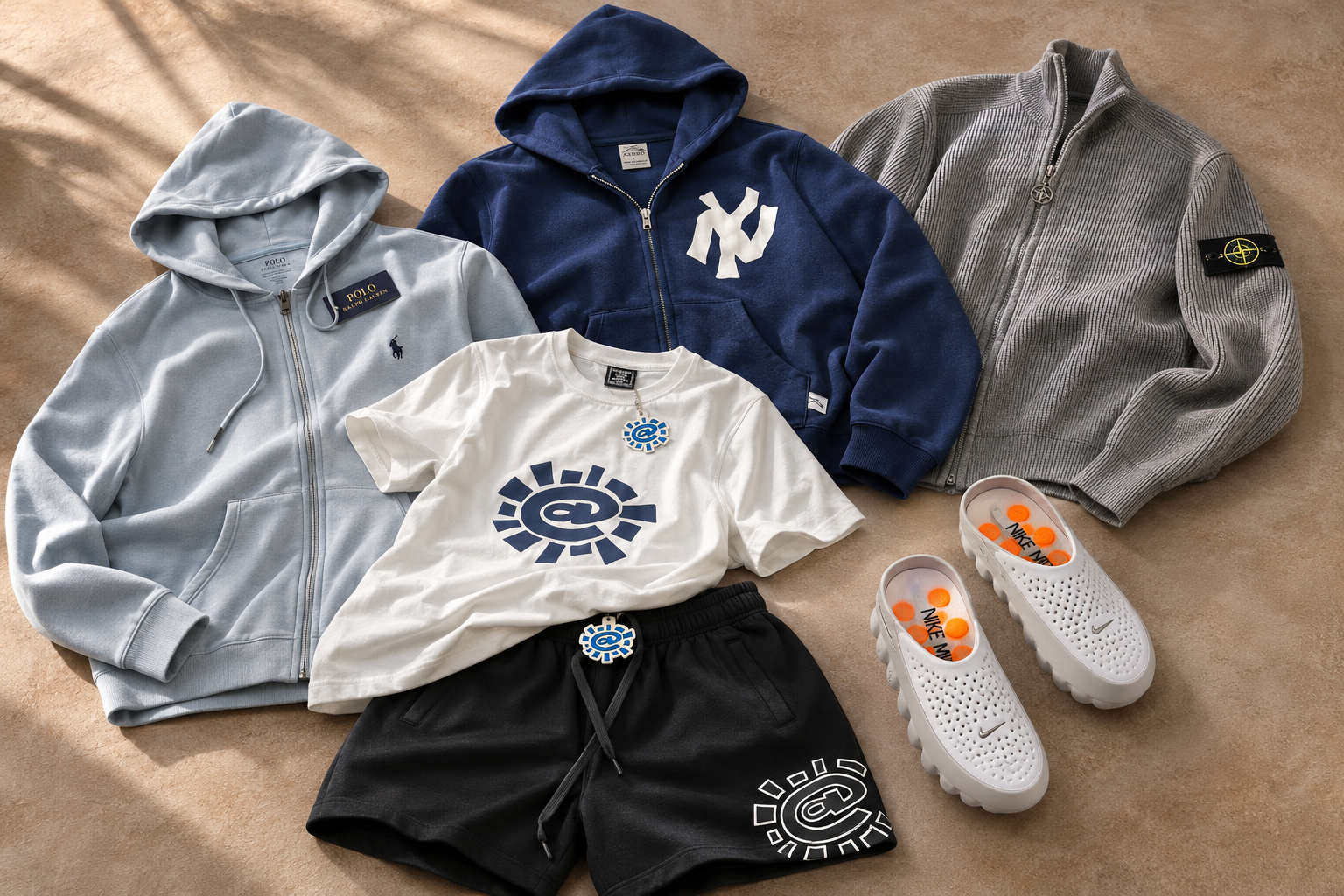
The focus of this set isn't on individual pieces, but on how four basic colors—black, white, gray, and blue—create layers, with a touch of orange and patterns for visual interest. To recreate a similar effect, start by determining the main color, then arrange the outerwear, inner layers, bottoms, and shoes to avoid clustering all eye-catching elements in one area. ## First, establish the color relationships Light gray, white, and black work well as a stable base. A light gray hooded zip-up jacke
Editor score 4.2 / 5
The focus of this set isn't on individual pieces, but on how four basic colors—black, white, gray, and blue—create layers, with a touch of orange and patterns for visual interest. To recreate a similar effect, start by determining the main color, then arrange the outerwear, inner layers, bottoms, and shoes to avoid clustering all eye-catching elements in one area.
First, establish the color relationships
Light gray, white, and black work well as a stable base. A light gray hooded zip-up jacket feels visually light and can be paired with a white top and black shorts, keeping the upper half bright while adding weight to the lower half. A gray knit stand-collar jacket is better suited to combining with black or white pieces, using the knit texture for detail without adding too many colors.
A navy jacket is suitable as the main color. It contrasts clearly with white patterns and also connects naturally with gray and black. If you want the image to be more vibrant, use orange as a small accent, such as in the shoe's internal structure or accessory details, to avoid too much orange disrupting the overall balance.
Use layering to arrange the clothing display
When laying flat, you can arrange in the order of "outerwear in the back, top in the middle, bottoms in the front." Place the hooded jacket or knit jacket at the back to showcase the collar, hood, and sleeve structure while providing a color block for the center area. When a short-sleeve top is placed in the middle, its pattern becomes the visual focus; shorts or denim shorts placed below add darker color blocks like black and blue-gray.
Shoes don't have to be placed right next to the clothes. Putting white shoes at the edge of the frame creates negative space and extends the bright color to the other side. If the shoe's upper has a prominent orange structure or side pattern, the shoes should not cover the clothing print, in order to keep the upper, sole, and clothing pattern all visible.

Three easy styling directions
- Light gray base layer: A light gray hooded jacket with a white tee and black shorts, choosing white shoes. The overall contrast is soft, suitable for highlighting the jacket's silhouette and chest details.
- Navy visual center: A navy hooded jacket as the main visual, with a white or gray inner layer, black bottoms, and white shoes to balance the dark area. The white lettering pattern can serve as a second focal point in the center of the image.
- Gray texture layer: A gray knit stand-collar jacket with white or black basics, blue-gray denim shorts for bottoms, using knit texture, denim surface detailing, and side webbing to add depth.
Choosing between patterns and details
When the top already has a large colorful pattern or prominent text, the bottoms should be solid or low-contrast to avoid competing for attention. The blue circular pattern on a white tee can echo the same color pattern on black shorts; a black tee with a large colorful pattern is better paired with simple gray, black, or white pieces.
Items with yellow tags, white text, or animal silhouettes can serve as local identification points, but avoid stacking too many similar-sized logos in the same display area. Put one large pattern in the center and scatter other logos to the edges or sleeves to make the image clearer.
What to check before choosing
Photos are good for judging appearance details such as color, pattern placement, pockets, drawstrings, zippers, ribbing, shoe upper perforations, and sole tread. To determine if it's suitable for actual wear, you should also check specific size data, actual measurements of the body and waist, shoe interior length, fabric descriptions, and more angles of the collar, cuffs, pant legs, and soles. Based on the current images alone, you cannot judge material composition, fit, comfort, durability, or performance.
Keep reading on this site
Grey-Toned Streetwear Flatlay Review: Color and Styling 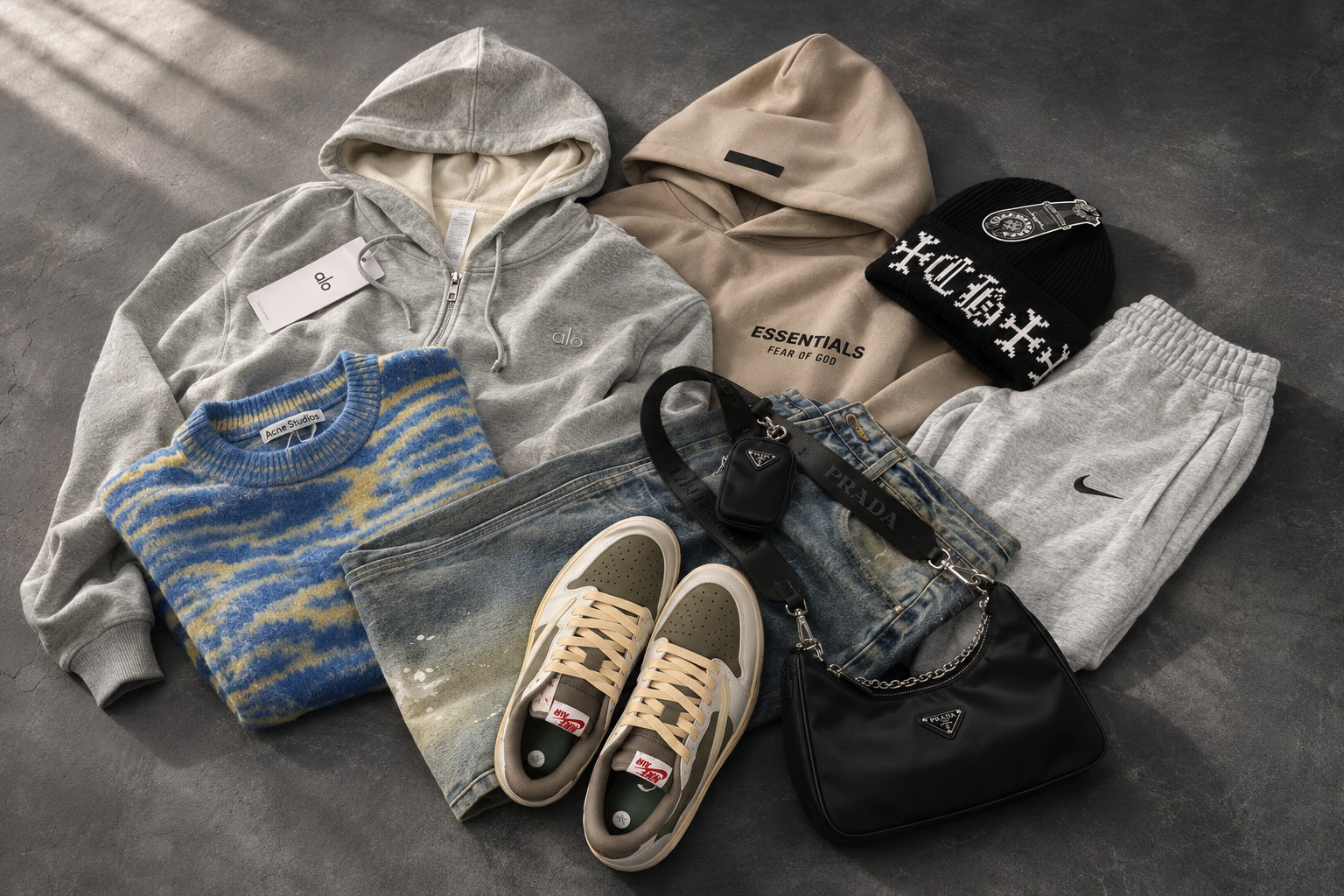
First, Look at the Overall Color Palette This flatlay uses grey, beige, and black as its base colors, creating a stable and easy-to-combine visual. The grey hooded zip-up jacket,…
Black Hoodie & Sneaker Details: Color Matching and Styling 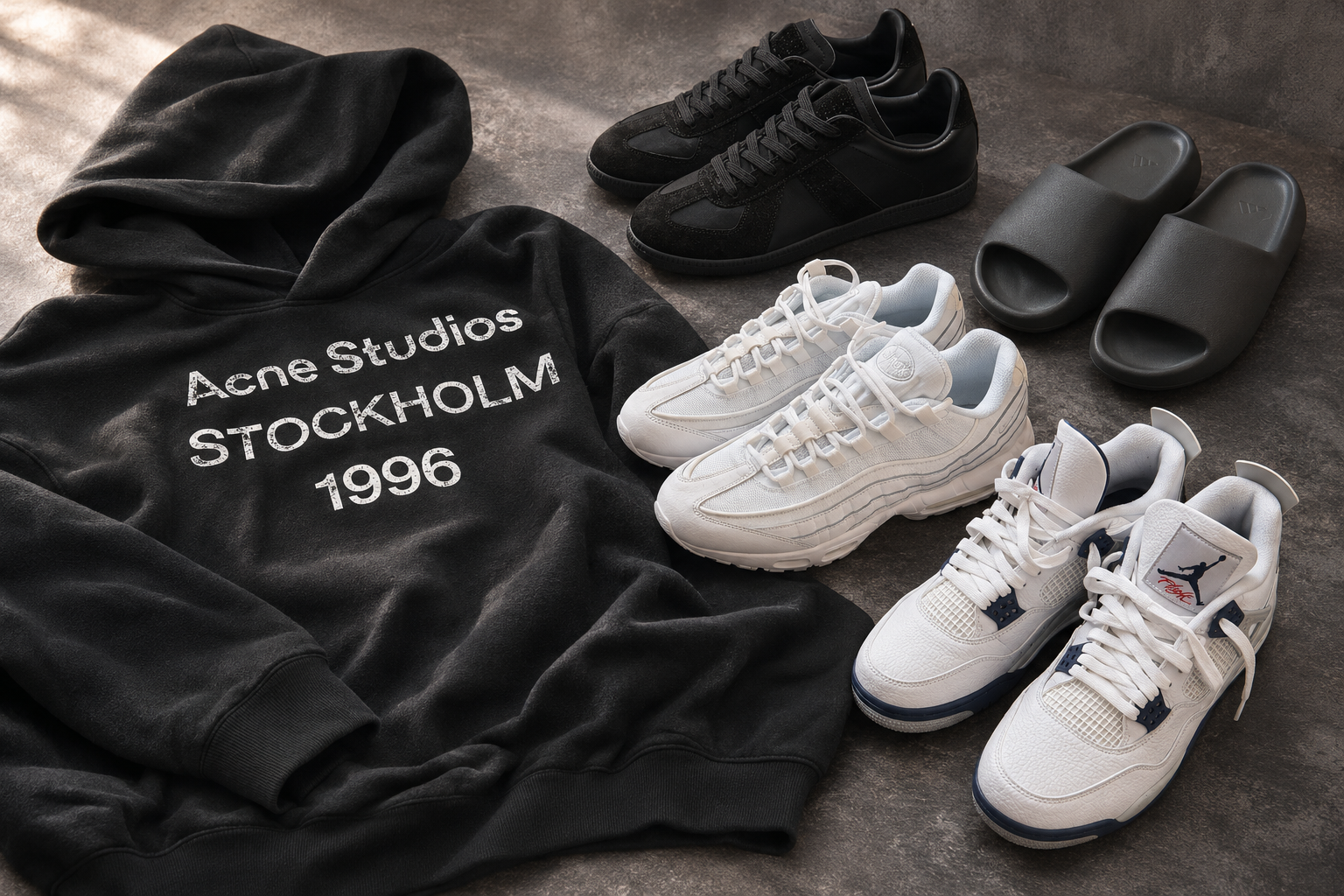
This setup centers on a black hoodie, paired with black low-top shoes, dark gray-black slides, and white and white-blue sneakers. The overall composition consists of a dark base,…
Gray and Black Hoodies Flat-Lay Review: Color Pairing 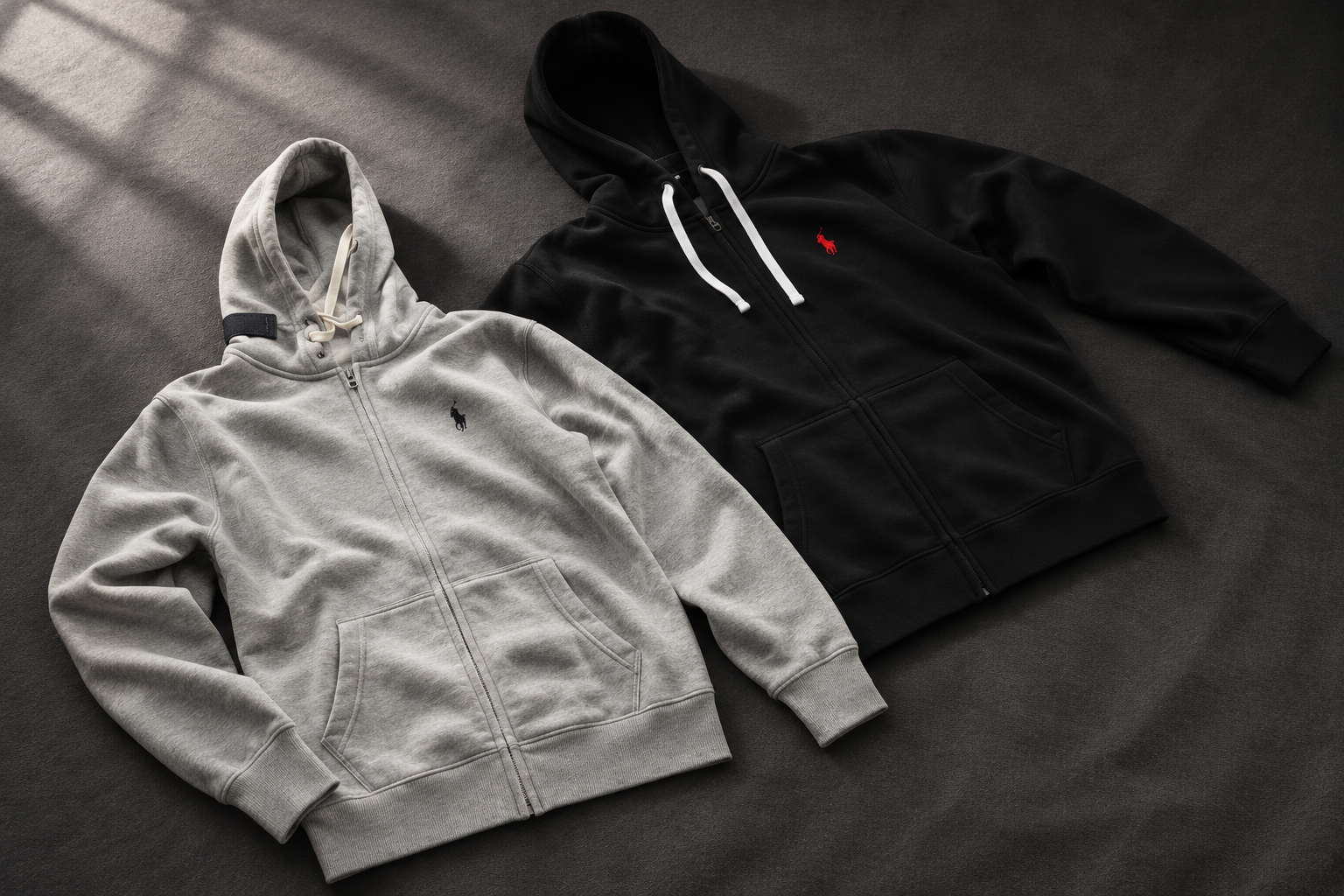
First, Look at the Two Basic Colors in the Frame The image uses a dark gray background to set off two zip-up hoodies: a light gray one in the foreground and a black one behind…
- This information is being prepared.