cnfanssheet.com
Gray and Black Hoodies Flat-Lay Review: Color Pairing
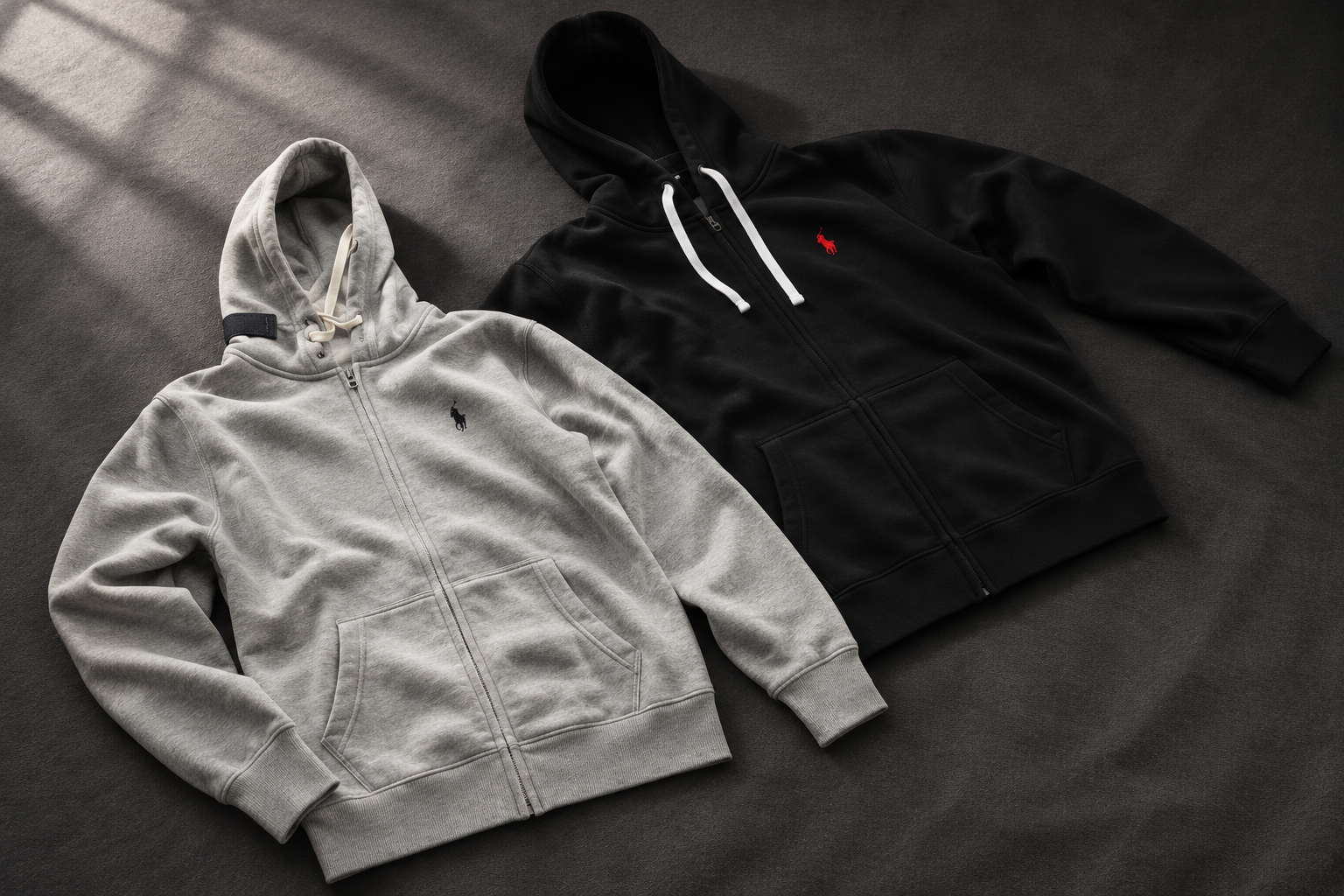
First, Look at the Two Basic Colors in the Frame The image uses a dark gray background to set off two zip-up hoodies: a light gray one in the foreground and a black one behind it, creating a sharp contrast between light and dark. Both hoodies show the hood, long sleeves, front zipper, and kangar
Editor score 4.2 / 5
First, Look at the Two Basic Colors in the Frame

The image uses a dark gray background to set off two zip-up hoodies: a light gray one in the foreground and a black one behind it, creating a sharp contrast between light and dark. Both hoodies show the hood, long sleeves, front zipper, and kangaroo pocket, making them suitable for observing how basic hoodies can present different styles through color and placement.
The light gray version looks lighter overall, with a small dark embroidered pattern visible on the chest, ribbed cuffs and hem, and a few hang tags placed in front. The black version's white drawstrings create a clear contrast, while the small red pattern on the chest adds a visual focal point. The cuffs, hem, and pocket outline are revealed through the light and shadow variations of the black fabric.
How to Choose Colors
If you want a softer, fresher look, you can use the light gray hoodie as the visual center, pairing it with white, beige, light blue, or medium blue bottoms. Light-colored shoes can continue the relaxed feel, while dark-colored shoes can anchor the overall tone for a sharper look.
The black hoodie works better as a base layer or outer layer. When paired with white, gray, or light khaki bottoms, the white drawstrings and red pattern become small pops of color. If you're wearing dark colors on top and bottom, you can add a bit of brightness through light-colored shoe uppers, a hat, or an inner layer to avoid making the outfit look too heavy.
When displaying both hoodies together, it's best to keep the contrast between light gray and black and avoid adding too many highly saturated colors. If you need variation, use just one red or white detail as an echo to keep the focus on the two hoodies themselves.
Flat-Lay Arrangement Tips
- Place the light gray hoodie in the foreground or a brighter part of the image, with the black one slightly behind, to naturally create depth.
- Arrange the two hoodies with a slight offset to avoid having the zippers, hoods, and pockets completely overlap, ensuring the main structures are clearly visible.
- Keep the hoods naturally spread out and the sleeves extended to the sides to more fully display the shoulder lines, sleeve lengths, and ribbed cuffs.
- Leave visible space for the drawstrings, embroidered patterns, and pocket edges; these small details can serve as the visual focal points of the image.
- A dark gray or charcoal background works well for showcasing both light and dark garments, but the background texture should not be too distracting.
Details Worth Noting When Styling
What can be judged from the image are color relationships, garment structure, and display effect. The light gray hoodie's embroidery, hang tags, ribbed cuffs, and hem are relatively easy to identify; the black hoodie's white drawstrings, red pattern, and kangaroo pocket outline stand out more. When styling, you can prioritize arranging shoe, hat, or inner layer colors around these visible elements.
The image cannot confirm material composition, thickness, warmth, fit, size accuracy, zipper feel, durability, or brand authenticity. To further determine whether it's suitable for everyday wear, you should check the product specifications, flat measurements, fabric descriptions, and detailed images from more angles.
Keep reading on this site
Grey-Toned Streetwear Flatlay Review: Color and Styling 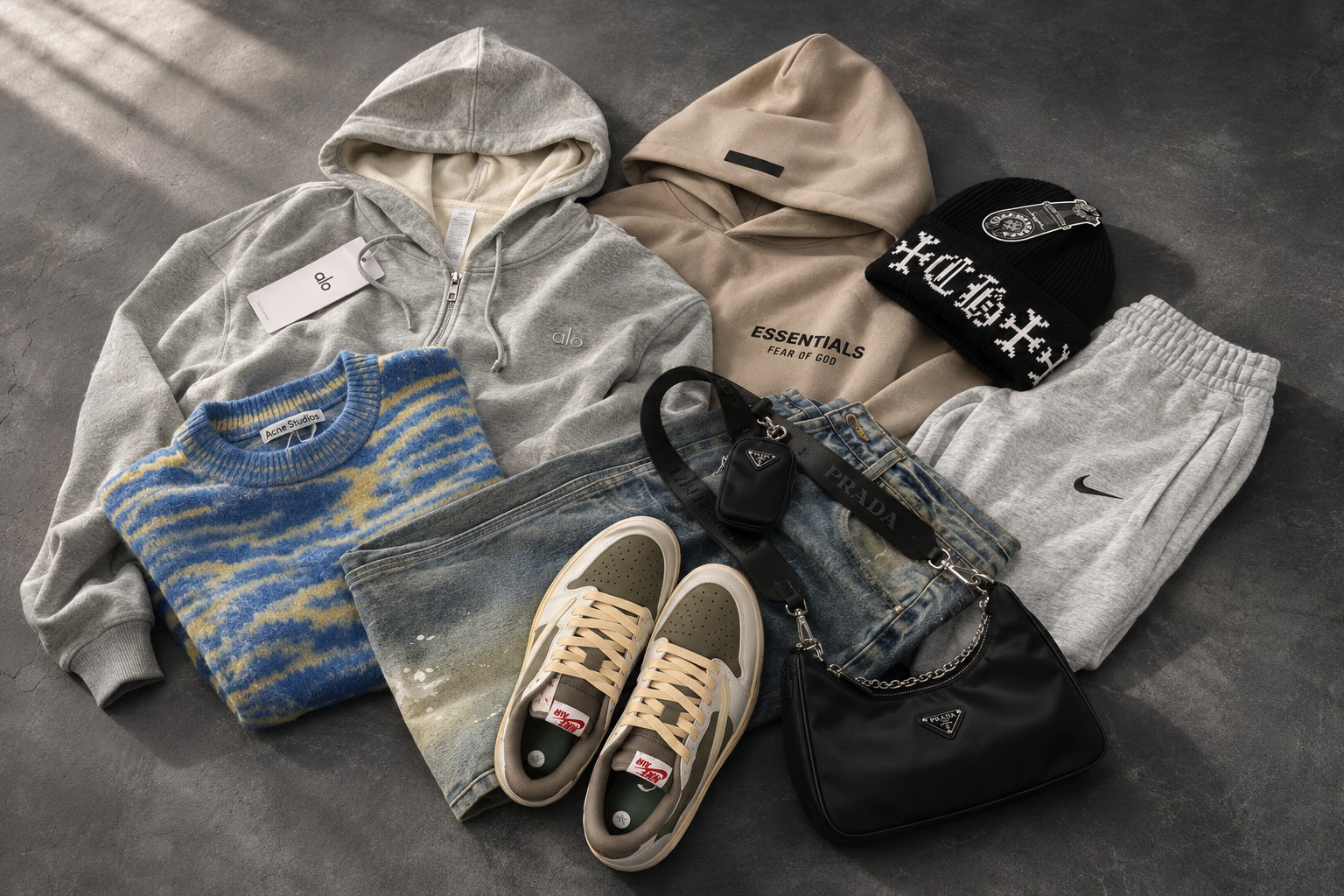
First, Look at the Overall Color Palette This flatlay uses grey, beige, and black as its base colors, creating a stable and easy-to-combine visual. The grey hooded zip-up jacket,…
Black Hoodie & Sneaker Details: Color Matching and Styling 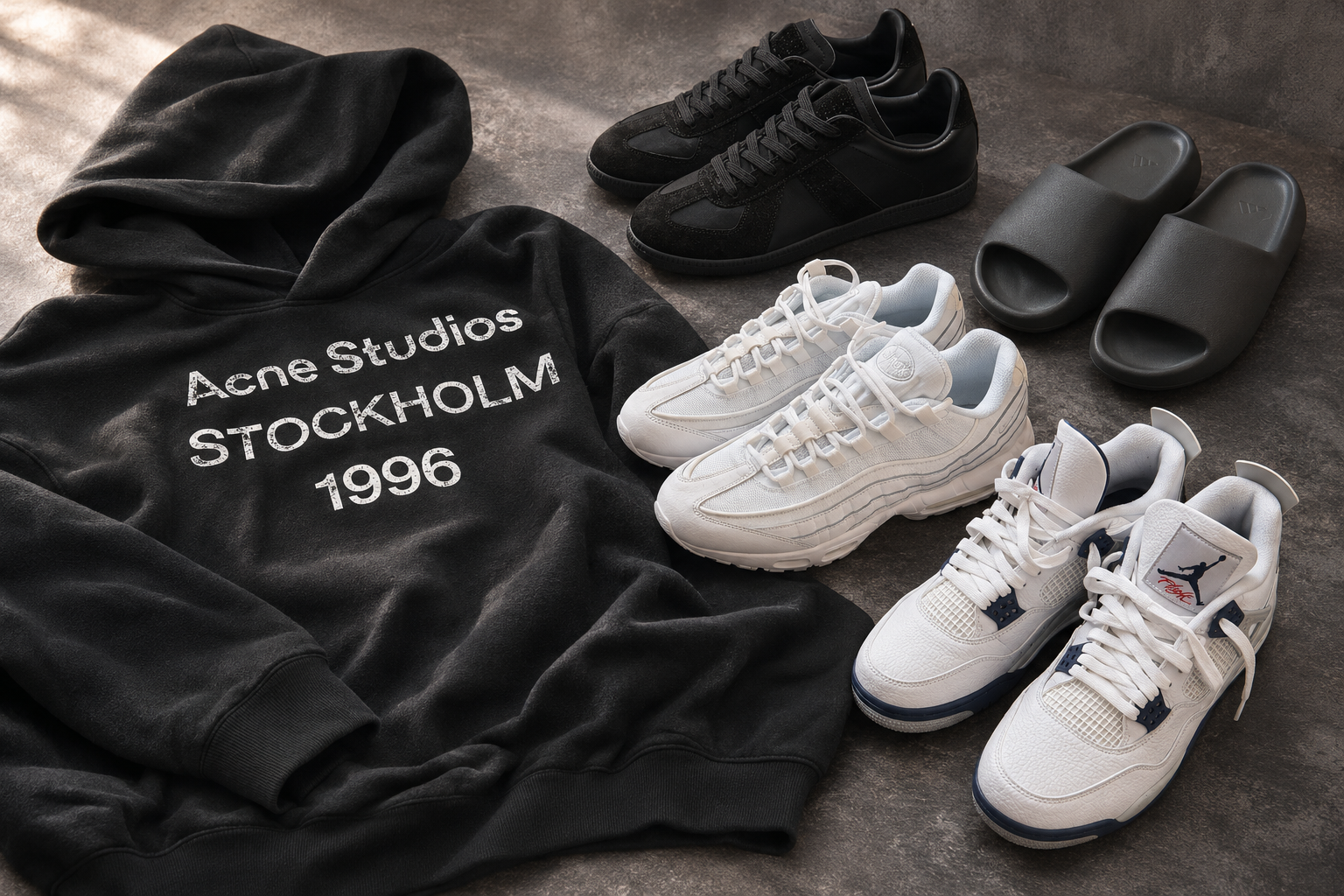
This setup centers on a black hoodie, paired with black low-top shoes, dark gray-black slides, and white and white-blue sneakers. The overall composition consists of a dark base,…
Community Apparel & Sneakers: Color and Styling Combos 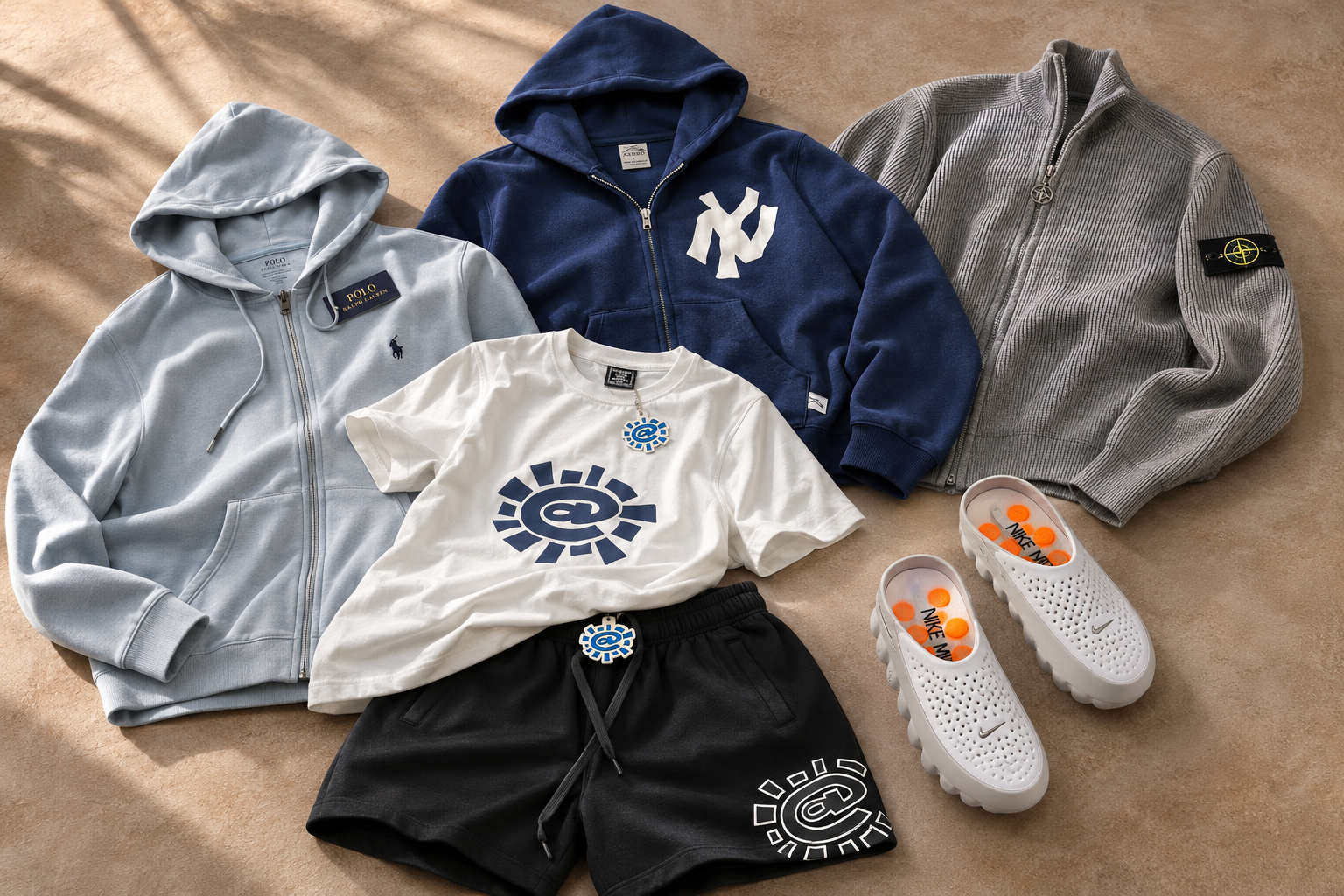
The focus of this set isn't on individual pieces, but on how four basic colors—black, white, gray, and blue—create layers, with a touch of orange and patterns for visual…
- This information is being prepared.